| The US ranks as one of the most religious nations among industrialized countries, but that may be changing. A Pew survey released last October showed that one-fifth of American adults say they don’t identify with any religion. Among young people under 30, nearly a third say they are religiously unaffiliated. And, these numbers appear to be on the rise. Is this evidence that America is becoming a secular nation, or is this simply a temporary trend? This week on Intersection, we’ll take a look at the rise of the religiously unaffiliated. | 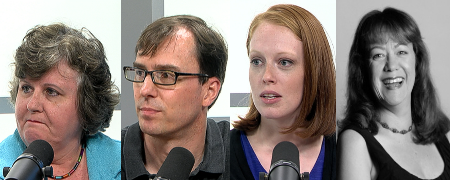 Panelists: Debra Mason, director, of the Center on Religion & the Professions Richard “Chip” Callahan, chair, MU Department of Religious Studies Rev. Molly Housh Gordon, minister, Unitarian Universalist Church of Columbia Kimberly Winston, national correspondent, Religion News Service (joining by phone) |
0 Comments
A growing body of research is looking into the connections between spirituality and the functioning of the human brain. Our panelists take us on a journey into the deep recesses of the religious mind in hopes of answering some key questions: Is there a part of the brain that’s responsible for making people religious? Or is it the other way around, with spirituality affecting the way the brain operates? 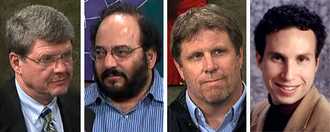 Panelists:
John Baker, executive director of the Community Foundation of Central Missouri and former pastor at First Baptist Church in Columbia Daniel Cohen, teaching assistant professor in the MU Department of Religious Studies Brick Johnstone, professor of health psychology in the MU School of Health Professions Andrew Newberg, neuroscientist and author of the book "Principles of Neurotheology" (joining the program by phone) With the holidays at hand, many of us will take time to appreciate and reflect on what we have. But what does it mean to be truly grateful in the modern world? How can parents instill a sense of gratitude in their children? And how do expressions of gratitude affect each of us as an individual and as a community? 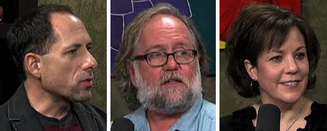 Panelists:
John Battaglia, pastor of the Christian Chapel Church Robert Johnson, professor of philosophy at the University of Missouri Sharon Dunski Vermont, pediatrician and author of "The Gratitude Experiment" The Harry Potter books and movies have captivated audiences around the world for more than a decade. With the final installment of the Harry Potter films out this summer, panelists discuss how all that witchcraft fits into the context of more mainstream religious traditions. 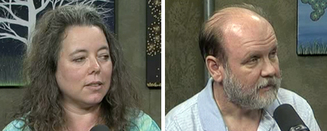 Panelists:
Signe Cohen, associate professor and director of graduate studies, MU Department of Religious Studies Rick Cotner, member of Calvary Episcopal Church who led the church’s adult forums on Harry Potter and religion How much of what we do is by choice, what philosophers and theologians call “free will”? And how much can be attributed to the unconscious workings of our brains? Can brain scans, such as functional MRIs, show what is happening in the brain? Can they predict violent criminal behavior - and if so, should they be admissible in legal proceedings? In advance of a symposium on the topic next weekend at MU, we invited a few experts to help explain how advanced study of the brain intersects with our humanity. 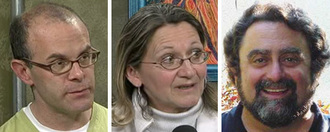 Panelists: Phil Robbins, University of Missouri associate professor of philosophy and co-chair of the Life Sciences and Society Symposium planning committee Ines Segert, University of Missouri professor of psychology Jim Fallon, professor of anatomy and neurobiology, University of California-Irvine (joining by phone) Related links:
Life Sciences and Society Symposium website NPR story about Jim Fallon’s discovery of his own psychopathic potential Overview brain imaging and purposes, as explained by the University of Pennsylvania CNN article about research by Adrian Raine (mentioned multiple times during the Intersection conversation) As the national political struggle continues over who should be allowed to marry, the number of couples saying “I Do” has been on the decline for the past 20 years. In celebration of Valentine’s Day our panelists address the question: How healthy is the state of marriage in our modern world? And, if it's really important to us as a society to support the institution of marriage, then what could be done to strengthen the individual unions across the land? 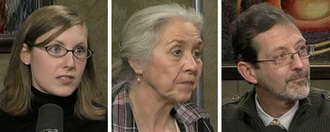 Panelists:
Tyler Jamison, doctoral student, MU Department of Human Development and Family Studies Susan Murray, psychologist and clinical director of MorningStar Counseling Center Steve Swope, pastor, Columbia United Church of Christ A string of recent suicides has prompted nationwide concern over bullying of gay teens. In this discussion, we explore what the climate is like for gay teenagers growing up here in mid-Missouri. 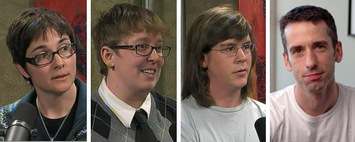 Panelists: Christy Hutton, therapist who works with LGBT college students in Columbia Megan Lee, board member for Prism, a group that supports LGBTQ youth in mid-Missouri Yuki White, Moberly Area Community College student who grew up in Columbia and experienced bullying in middle and high school Dan Savage, Seattle-based syndicated columnist and creator of the "It Gets Better" video project (joining the program by phone) Richard Blount, founder of Open Door Ministries (joining the program by phone, not pictured) Related links:
The Trevor Project, a suicide prevention advocacy group and suicide hotline for gay and questioning youth Coverage of Columbia’s candlelight vigil for the suicides on October 20 (from the Columbia Missourian) Coverage of Spirit Day, organized by GLAAD (Gay and Lesbian Alliance Against Defamation) -- Students at both Hickman High and Rock Bridge formally participated. (from the Columbia Missourian) Young and Gay in Real America (four-part series by The Washington Post, published in 2004) Between now and the year 2025, Missouri's senior population is expected to rise from about one in every seven residents to about one of every five. Panelists discuss new approaches to meeting the needs of seniors in mid-Missouri. They also address what you can do to prepare for your own future. 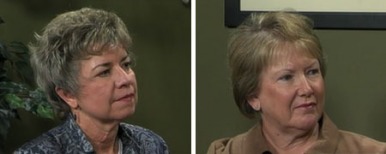 Panelists Jean Leonatti, executive director, Central Missouri Area Agency on Aging Marilyn Rantz, professor of nursing, University of Missouri Keith Knapp, CEO of Christian Care Communities, a not-for-profit organization based in Louisville, Kentucky (joining the program by phone) | PodcastsClick here to browse
the podcast archive ArchivesJune 2014 CategoriesAll |
 RSS Feed