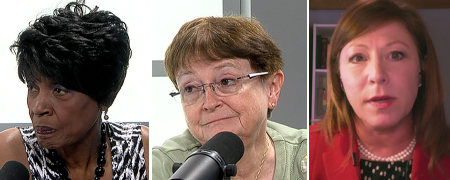
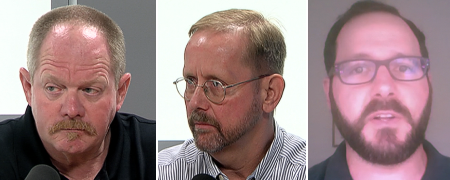
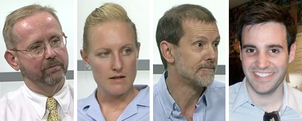
| Later this week, MU will host a panel discussion exploring the civil rights history of the university. The talk, which takes place this Thursday night at the Missouri Theater, is just one of a number of events scheduled across town to honor Black History Month. Locally, much has improved since the days of Jim Crow, but some believe that more can be done to make Columbia a more inclusive community. This week on Intersection, we’ll take a look back at some of the civil rights gains at MU and the town at large, and talk about the lessons that can be learned from them. | 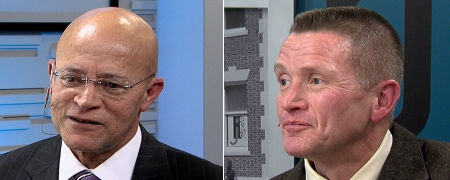 Panelists: Michael Middleton is MU’s deputy chancellor. Prior to that, he was a professor in the university’s School of Law. He also was the first African American student to enroll and graduate from MU’s law school. William Horner is a Professor of Political Science at MU, and the co-author of a book on Lloyd Gaines, who was an early civil rights pioneer who challenged the Law School’s ban on African American students. Mary Ratliff is the president of the state chapter of the NAACP, and has lived in Columbia since 1959. (joining by phone) |
0 Comments
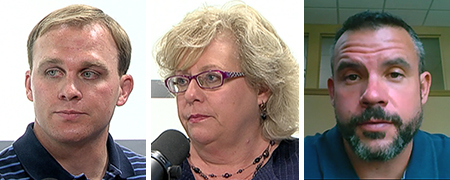
Local journalism is in a state of crisis, according to an in-depth report released by the Federal Communications Commission this summer. With newspaper resources in decline and online media struggling to to fill the void in accountability reporting, where can people turn to get quality coverage of civic affairs? And what could be done to make sure citizens are able to get the local news they need? 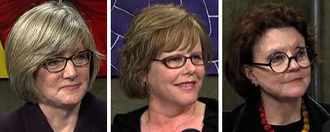 Panelists:
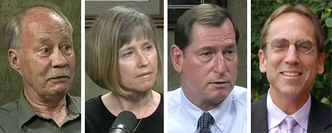
Barbara Cochran, Curtis B. Hurley chair in public affairs journalism at the Missouri School of Journalism and former president of the Radio Television Digital News Association Renee Graham, public communications officer for the City of Columbia Amy McCombs, Lee Hills chair in free press studies at the Missouri School of Journalism | PodcastsClick here to browse
the podcast archive ArchivesJune 2014 CategoriesAll |
 RSS Feed