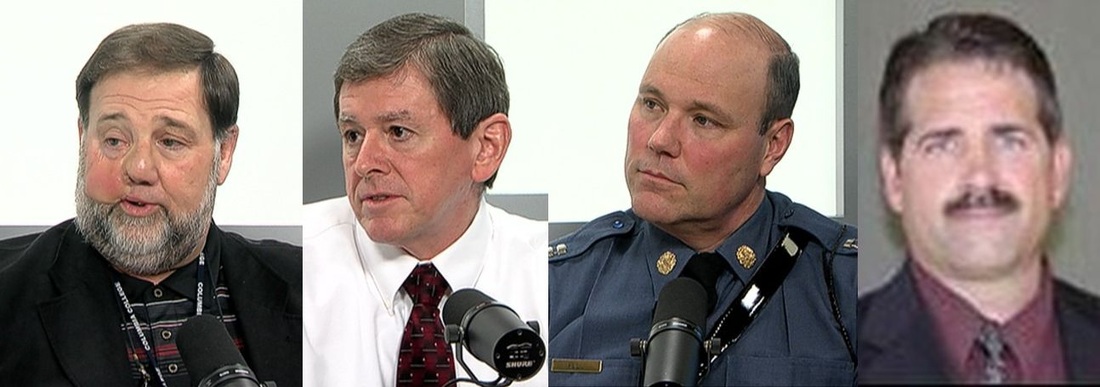
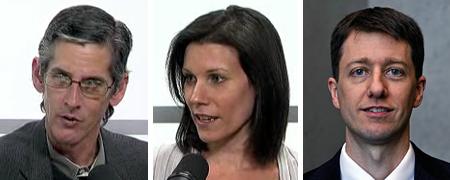
| Last week a Missouri Court of Appeals vacated the conviction of Ryan Ferguson. Listeners might recall Ferguson as one of the two men accused in the 2001 murder of Columbia Daily Tribune Sports editor Kent Heitholt. In its legal opinion, the appeals court said the prosecution violated Ferguson’s due process rights by withholding favorable information from the defense team. In this case, it was an interview with the wife of a key witness that could have undermined her husband’s testimony. This type of evidence suppression or withholding, which is known as a Brady violation, may be more common than you think. A 1999 Chicago Tribune reporton prosecutorial misconduct found that 381 homicide convictions were later vacated because “prosecutors hid evidence or allowed witnesses to lie.” This week on Intersection, we’ll take a closer look at Ryan Ferguson’s case, and learn more about Brady violations. | 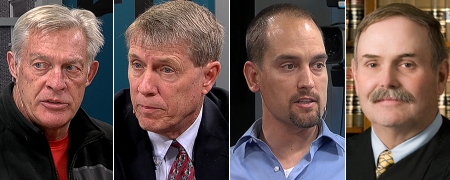 Panelists Bill Ferguson is the father of Ryan Ferguson. Rodney Uphoff is a professor in the MU School of Law. Before becoming a law professor, Uphoff was a public defender. John Roodhouse is a partner in the law firm of Jones, Schneider and Stevens, LLC. He’s also worked as a Boone County Assistant Prosecuting Attorney and Assistant Attorney General for the State of Missouri. Charles Atwell is an attorney with the law firm of Foland, Wickens, Eisfelder, Roper & Hofer, P.C. Before that he was a circuit judge in Jackson County. Full disclosure: Atwell also worked with the law firm of Wyrsch, Atwell, Mirakian, Lee & Hobbs which represented Ryan Ferguson, although Atwell was not directly involved in the case. |
10 Comments
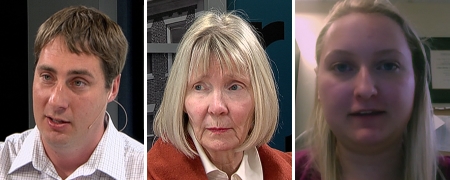
After the shooting deaths of two Columbia teenagers this spring, we follow up with this discussion about youth violence and efforts to prevent it in our community. We hear from two teenagers about the challenges and opportunities young people encounter, and we discuss programs that encourage teens to get involved.  Panelists:
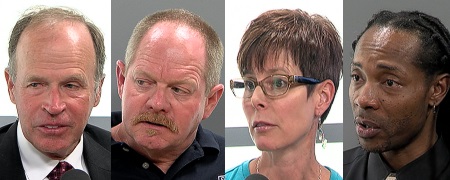
Josh Bass, teacher at Douglass High School Nakita Cade, junior at Hickman High School Tarrence Davis, sophomore at Hickman High School Sherrod Ellis, empowerment coordinator for Silence the Violence According to a report released by the Missouri Attorney General, black drivers were more likely than people of any other race to be stopped by Columbia Police. A coalition of groups recently convened the first in a series of public meetings designed to address the issue. But what steps could law enforcement agencies take to reduce the effects of bias? And how well might they work? 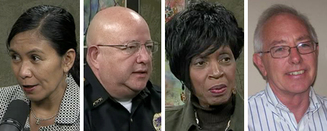 Panelists:
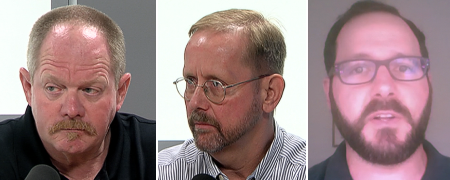
Noor Azizan-Gardner, interim chief diversity officer, University of Missouri Ken Burton, chief, Columbia Police Mary Ratliff, president of the Missouri and Columbia unit of the NAACP Don Love, chairman, Missouri Association of Social Welfare Human Rights Task Force (joining the program by phone) On Aug. 26, Kraig Kahler, a former Columbia Water and Light director, was found guilty of killing his wife, his two teen-aged daughters and his wife’s grandmother, whose home they were visiting. The case raises the troubling question: How can a family in our community be destroyed in this kind of tragedy? In this discussion, we talk about how these kinds of shocking domestic violence events come to pass and, more importantly, how they might be prevented. IF YOU ARE IN AN ABUSIVE SITUATION AND NEED HELP, you can call the National Domestic Violence Hotline: 1−800−799−SAFE (7233) or TTY 1−800−787−3224 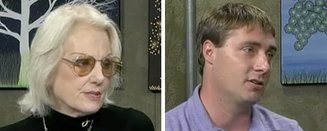 Panelists: Barbara Hodges, executive director, True North Zachary Wilson, development director, Missouri Coalition Against Domestic and Sexual Violence More information in the chat below Details about some of the work being done to help deter abusers was provided in the online chat room during today's discussion. Susan Schopflin, quality improvement director at Family Counseling Center of Missouri, described the work of M.E.N.D. (Men Exploring Non-violent Directions), a 27 week batterer intervention program. Click below to replay the chat and read what she had to say. In collaboration with the Columbia Missourian, we follow up on the newspaper's three-month investigative report on the Columbia Regency Mobile Home Park with a public conversation about what can be done to ensure all levels of housing are safe, clean and up to code. Along with what panelists say, we also hear from several former residents of Columbia Regency who called in to share their experiences. 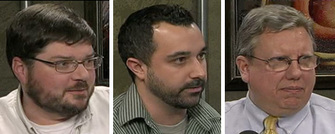 Panelists:
* Bill Cantin, neighborhood response coordinator, Columbia Office of Neighborhood Services * Brad Racino, Columbia Missourian reporter * Phil Steinhaus, CEO, Columbia Housing Authority | PodcastsClick here to browse
the podcast archive ArchivesJune 2014 CategoriesAll |
 RSS Feed